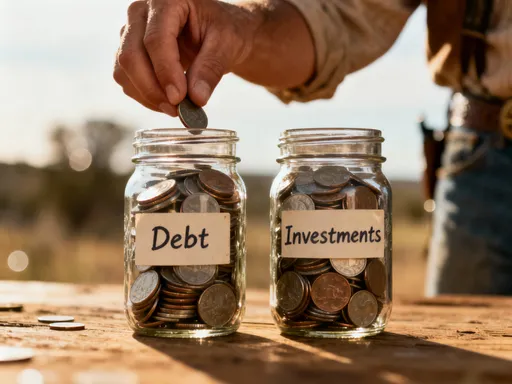
How I Tackled Debt and Built a Smarter Investment Layout—Step by Step
Paying off debt while trying to invest felt impossible—until I found a system that worked. I was overwhelmed, stuck in a cycle of payments with no room to grow. Then I shifted my mindset: debt repayment and investing aren’t enemies. This is how I structured my finances to clear debt *and* lay the groundwork for real wealth—without shortcuts or risky bets. It wasn’t about making more money; it was about designing a smarter flow for the money I already had. By treating my finances like a system rather than a series of emotional choices, I gained control. The results were gradual but undeniable: less stress, growing confidence, and momentum that carried me past the tipping point.
The Breaking Point: When Debt Felt Like a Dead End
There was a moment—standing in my kitchen, staring at a stack of bills and a credit card statement with a balance I couldn’t remember accumulating—when I realized I wasn’t managing my money; I was reacting to it. Every paycheck disappeared into minimum payments, late fees, and the quiet panic of knowing that if something broke, I wouldn’t be able to fix it. I had no emergency fund, no investments, and no real plan. I felt trapped, as though I were running on a treadmill that kept speeding up. The emotional toll was just as heavy as the financial one. I blamed myself, wondering what I had done wrong. Was I spending too much? Was I lazy? Was I just bad with money?
That self-judgment only made things worse. It created a cycle of avoidance—ignoring statements, skipping budget reviews, hoping the problem would shrink on its own. But debt doesn’t shrink. It compounds. And so does stress. What finally changed wasn’t a windfall or a pay raise. It was a shift in perspective. I stopped seeing debt as a personal failure and started seeing it as a structural issue—a system that needed redesigning. This wasn’t about morality; it was about mechanics. Just like a car that won’t start doesn’t mean the driver is bad, a broken financial system doesn’t mean the person is flawed. Once I made that mental shift, I could begin to look objectively at my numbers, my habits, and my options. I stopped asking, “Why am I so bad at this?” and started asking, “What’s not working in the system?” That question opened the door to real solutions.
The first step was gathering all the data. I listed every debt: credit cards, medical bills, student loans, and even that small personal loan from a family member I’d been too embarrassed to track. I recorded the balances, interest rates, minimum payments, and due dates. Seeing it all in one place was painful, but it was also empowering. For the first time, I had a full picture. I wasn’t guessing anymore. I wasn’t avoiding. I was facing it. And with that clarity came the first spark of hope. If I could see the problem clearly, I could start to solve it. I didn’t need perfection. I needed a starting point. And that starting point was honesty.
The System Mindset: Why Structure Beats Willpower
For years, I relied on willpower. I’d make a budget on Monday, stick to it for two days, then cave on Thursday after a long week. I’d promise myself I’d save $200 this month, only to spend it on something “urgent” by the third week. Willpower is exhausting, and it’s unreliable. It depends on mood, energy, and motivation—all of which fluctuate. What doesn’t fluctuate is a well-designed system. I learned that true financial progress doesn’t come from bursts of discipline but from consistent, automated actions that don’t require daily decision-making. A system turns good intentions into default behaviors.
Think of it like a thermostat. You set the temperature once, and the system maintains it without you having to think about it. That’s what I wanted for my finances—a set-it-and-forget-it structure that would keep me on track even when I was tired, busy, or distracted. I started by automating the basics: direct deposit splits, bill payments, and small investment contributions. I didn’t have to remember to pay my credit card on time; it happened automatically. I didn’t have to decide whether to save this week; a portion of my paycheck went straight into a high-yield savings account before I even saw it. These small changes removed friction and reduced the mental load of managing money.
But a system isn’t just automation. It’s also about design. I mapped out my financial ecosystem: income in, expenses out, debt reduction, savings, and investments. Each had a designated lane, like cars on a highway. I set rules for each lane—how much could enter, how much could exit, and what triggered a shift. For example, once a debt was paid off, the payment amount automatically redirected to the next debt or into investments. This created a domino effect, where progress in one area fueled progress in another. The system wasn’t rigid; it had feedback loops. If I got a bonus, a portion went to debt, a portion to savings, and a portion to a small celebration. If I had a lean month, the system had buffers to prevent derailment.
The beauty of a system is that it doesn’t care how you feel. It doesn’t care if you’re tired, stressed, or tempted. It just works. And over time, the repetition of these small, consistent actions built momentum. I stopped seeing financial progress as something I had to force and started seeing it as something that happened naturally when the structure was in place. That shift—from effort to flow—was transformative.
Mapping the Debt Payoff Engine: Order, Timing, and Momentum
With my system in place, the next step was deciding how to tackle my debts. I’d heard of the avalanche method—paying off debts with the highest interest rates first—and the snowball method—clearing the smallest balances first to build momentum. I tried both, and while each had strengths, neither worked perfectly on its own. The avalanche saved me money on interest, but the progress felt slow. The snowball gave me quick wins, but I was still paying high interest on larger debts. So I created a hybrid approach that balanced financial efficiency with psychological motivation.
I started by categorizing my debts into three tiers. Tier one was high-interest debt—anything above 10%. These were my priority because they were eroding my wealth the fastest. Tier two was medium-interest debt between 6% and 10%. Tier three was low-interest debt under 6%, including my student loan, which had a fixed rate and tax benefits. I focused on paying off tier one debts first, but I didn’t ignore the others. I kept making minimum payments on everything, then directed extra funds to the highest-interest debt in tier one. Once that was gone, I moved to the next.
But here’s what made the difference: I built in milestone rewards. After paying off each debt, no matter how small, I allowed myself a modest celebration—a nice dinner, a new book, a weekend outing. These weren’t extravagant, but they reinforced the behavior. They turned debt payoff from a punishment into a series of achievements. I also tracked my progress visually, using a simple chart on my fridge. Every time I made a payment, I filled in a box. Watching the boxes fill up gave me a sense of forward motion, even when the numbers were still large.
Timing was also crucial. I aligned my debt payments with my pay cycle. Right after payday, I made my largest extra payment. That way, the money was gone before I could spend it. I also used windfalls—tax refunds, bonuses, side income—to make lump-sum payments. These weren’t required by the system, but they accelerated progress. And because I had a clear plan, I knew exactly where that extra money should go. No more hesitation, no more guilt. The system told me what to do.
Investment Layout Isn’t Just for the Debt-Free—It’s a Shield
One of the biggest myths I believed was that I had to be completely debt-free before I could invest. I thought putting money into the market while carrying debt was irresponsible. But then I ran the numbers. Inflation was eroding the value of the cash I was hoarding. Meanwhile, the stock market’s average annual return over the past 90 years has been around 10%. By waiting, I wasn’t being cautious—I was losing ground. The real risk wasn’t investing with debt; it was delaying investing altogether.
So I started small. I opened a low-cost index fund account with a major brokerage that allowed automatic contributions as low as $25 per month. I chose a broad-market index fund that tracked the S&P 500 because it offered instant diversification and low fees. This wasn’t about getting rich quickly; it was about building the habit of investing and protecting my future purchasing power. Even while paying off debt, I committed to investing that $25 every month without fail.
The psychological benefit was just as important as the financial one. Investing gave me a sense of agency. It reminded me that I wasn’t just surviving; I was building. It shifted my mindset from scarcity to growth. And because the amount was small, it didn’t strain my budget. I wasn’t choosing between debt and investing; I was doing both. The key was automation. The $25 was withdrawn the day after payday, before I could rationalize skipping it. Over time, that small amount grew—not just in value, but in confidence. I began to see myself as an investor, not just a debtor.
This early exposure also taught me how markets work. I experienced small ups and downs, but I didn’t panic. I learned to stay the course. That emotional resilience became invaluable later when I increased my contributions. By the time I paid off my last debt, I wasn’t a novice anymore. I had years of experience managing my investments calmly and consistently. Starting early, even with tiny amounts, gave me a head start that compound interest could amplify.
Balancing Act: Allocating Cash Between Debt and Investments
So how did I decide where each dollar should go? I developed a flexible allocation model based on my financial phase. In the early stages, when my high-interest debt was significant, I followed an 80/15/5 split: 80% of extra funds went to debt, 15% to a growing emergency fund, and 5% to investments. This ensured I was aggressively reducing debt while still building financial resilience and starting to invest.
As my high-interest debt shrank, I adjusted the split. Once I had three months of expenses saved and only medium- or low-interest debt left, I shifted to a 60/20/20 model. Debt was still a priority, but I increased investment contributions. By this stage, I was also earning a bit more from side work, which I routed entirely into the investment lane. This gradual rebalancing prevented shock to the system. I wasn’t flipping a switch; I was evolving the plan as my situation improved.
The emergency fund was a critical buffer. I started with $1,000 as a starter fund—enough to cover minor surprises without going back to credit cards. Then, as I paid down debt, I grew it to three to six months of essential expenses. This fund wasn’t meant to earn high returns; it was meant to prevent setbacks. Knowing it was there reduced anxiety and kept me from dipping into investments during tough months.
Flexibility was built into the system. If I had an unusually high income month, I might temporarily shift to a 70/10/20 split, accelerating debt payoff. If I had an unexpected expense, I could pull from the emergency fund without disrupting the rest of the plan. The system wasn’t rigid; it was responsive. It had rules, but it also had room to adapt. That adaptability prevented burnout and made long-term adherence possible.
Risk Control: Protecting Progress Without Paralysis
One of my biggest fears was losing money in the market. I’d heard stories of people who invested and lost everything. But I came to realize that the real risk wasn’t market volatility; it was inaction. Not investing carries its own risk—erosion of wealth through inflation, missed compounding, and dependence on debt. So I focused on managing risk, not avoiding it. I implemented simple, effective safeguards that protected my progress without overcomplicating my strategy.
First, I diversified from the start. My initial investment was in a broad-market index fund, but as my portfolio grew, I added exposure to international markets and bonds. This didn’t mean chasing trends or picking stocks. It meant spreading my money across different asset classes to reduce the impact of any single downturn. I also used dollar-cost averaging—investing a fixed amount regularly, regardless of market conditions. This reduced the risk of buying at a peak and smoothed out my entry points over time.
I set clear limits on exposure. I never invested money I would need within the next five years. My emergency fund and debt payments were always funded first. I also avoided leverage and complex instruments like options or margin trading. My approach was simple, transparent, and within my understanding. If I couldn’t explain it to a friend in plain language, I didn’t do it.
Finally, I built in automatic rules. For example, I set up alerts if my portfolio dropped more than 15% in a month, not to panic, but to review. I didn’t sell automatically, but I used the alert as a signal to assess whether my strategy still made sense. This removed emotion from decision-making. I wasn’t reacting to headlines; I was following a plan. Over time, this disciplined approach insulated me from the noise and kept me focused on long-term growth.
From Payoff to Growth: Transitioning Into Full Investment Mode
The day I paid off my last debt, I didn’t stop. In fact, I accelerated. Every dollar that had been going toward debt payments was now redirected into investments. That $400 monthly payment didn’t disappear—it became $400 in monthly contributions to a diversified portfolio. I increased my allocation to growth-oriented assets, added real estate investment trusts for income, and began contributing the maximum to my retirement accounts.
But I didn’t abandon the system. The same principles that guided my debt payoff—automation, consistency, and discipline—now fueled my wealth-building phase. I set new milestones: $10,000 in taxable investments, then $50,000, then $100,000. Each goal had a timeline and a clear path. I reviewed my progress quarterly, adjusting allocations as needed but never losing sight of the long-term vision.
The shift wasn’t just financial; it was psychological. I no longer saw money as something to be feared or controlled tightly. I saw it as a tool—a force that, when directed intentionally, could create freedom. The habits I’d built during the debt years served me even better in the growth phase. I wasn’t tempted by get-rich-quick schemes or speculative bets. I trusted the process. And the process delivered.
Compound interest, which had seemed irrelevant when I was struggling to make minimum payments, now became my most powerful ally. The early investments, small as they were, had grown significantly. And the new contributions were building on that foundation. I wasn’t chasing wealth; I was growing it, steadily and sustainably.
The Power of a System That Grows With You
This journey wasn’t about extreme sacrifice or lucky breaks. It was about design. By creating a financial system that combined debt repayment with early, disciplined investing, I turned chaos into clarity. I replaced stress with structure, fear with forward motion. The system didn’t demand perfection; it rewarded consistency. And over time, consistency produced results.
What I learned is that financial freedom isn’t a destination; it’s a practice. It’s not about reaching a number and stopping. It’s about building habits, systems, and mindsets that allow you to keep growing, no matter your starting point. Whether you’re buried in debt or just starting to invest, the same principles apply: automate what you can, prioritize what matters, protect against setbacks, and stay the course.
The real win wasn’t just paying off debt or growing a portfolio. It was gaining confidence—the quiet, unshakable belief that I could handle whatever came next. That confidence has spilled over into every area of my life. I make better decisions, take smarter risks, and plan with more clarity. The system didn’t just change my finances; it changed me. And that’s a return no market can measure.