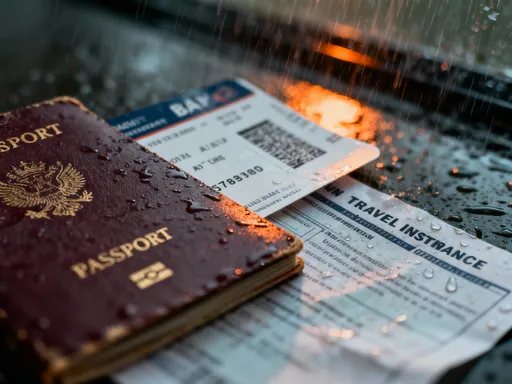
Why I Never Travel Without This Financial Safety Net
Have you ever thought about what happens if your trip gets canceled or you fall ill abroad? I didn’t either—until I learned the hard way. Travel insurance isn’t just another expense; it’s a smart financial tool that protects your budget and peace of mind. As a beginner, I was overwhelmed by options, but understanding its real value changed how I plan every journey. Let me break it down simply. What seemed like an optional add-on turned out to be one of the most practical decisions I’ve made as a traveler. It’s not about expecting the worst—it’s about preparing for the unexpected in a way that keeps your hard-earned money safe and your plans intact.
The Moment I Realized I Needed Protection
It was supposed to be the trip of a lifetime—a two-week family vacation to a coastal European country, months in the making. Flights were booked, a seaside villa reserved, and tickets purchased for a popular cultural festival. Everything was confirmed. Then, three days before departure, my youngest child developed a high fever and was diagnosed with a contagious respiratory infection. The doctor advised against air travel. Our trip was canceled—completely. In that moment, disappointment was overwhelming, but what followed was even more stressful: the financial fallout. The airline offered a credit minus a steep change fee. The villa owner, though sympathetic, could not refund the deposit. Festival tickets were non-refundable. After tallying the losses, we were out over $3,200—money that had been carefully saved from household budgets and weekend shifts. We hadn’t considered travel insurance because we assumed nothing would go wrong. We were healthy, plans were solid, and the trip was domestic in nature—except it wasn’t. The reality hit hard: illness doesn’t check your itinerary before striking, and life doesn’t pause for vacation plans.
This experience wasn’t just about lost money; it was about the emotional toll of feeling powerless. We had worked hard to make that trip happen, and watching it dissolve with no recourse left us drained. What made it worse was realizing that protection existed and we had skipped it to save a few hundred dollars. That small decision cost us much more in the end. It wasn’t until I spoke with a financial advisor, someone who also travels with family, that I understood the bigger picture. She explained that travel insurance isn’t about fear—it’s about financial discipline. Just as we insure our homes, cars, and health, our travel investments deserve protection too. The mindset shift was subtle but powerful: viewing insurance not as an expense but as a risk management strategy. From that point on, I committed to never booking another trip without it. Not because I expected disaster, but because I valued peace of mind and financial control.
What Travel Insurance Really Is (And What It Isn’t)
Travel insurance is often misunderstood. Many people assume it’s a luxury for frequent flyers or international adventurers, but in truth, it’s a practical financial safeguard accessible to every traveler. At its core, travel insurance is a policy designed to reimburse you for covered losses that occur before or during your trip. These can include trip cancellations, interruptions, medical emergencies abroad, lost luggage, and even emergency evacuations. It acts as a financial backstop, ensuring that unexpected events don’t turn into out-of-pocket disasters. Yet, it’s crucial to understand what it does not cover. For instance, it won’t protect you from poor planning, willful negligence, or losses due to uninsurable reasons like changing your mind or fear of travel. It also doesn’t replace your regular health insurance—rather, it supplements it, especially when you’re outside your home country where local healthcare systems may not recognize your domestic coverage.
One of the most common misconceptions is that credit card benefits or existing health insurance are enough. While some premium credit cards offer limited travel protection, these benefits are often narrow in scope. They might cover trip cancellation but exclude medical care abroad. Or they may provide rental car insurance but not evacuation services. More importantly, they usually require you to charge the entire trip to that card, which isn’t always feasible. Similarly, standard health insurance plans typically do not cover medical treatment in foreign countries, or if they do, the reimbursement process is slow and incomplete. I learned this the hard way when a friend fell ill during a trip to Southeast Asia and faced a $4,000 hospital bill—her insurer denied the claim due to ‘out-of-network care.’ Travel insurance fills these critical gaps. It’s not redundant; it’s complementary. Another myth is that short trips don’t need coverage. But disruptions can happen on a weekend getaway just as easily as on a month-long tour. The key is not the trip’s length but the amount of prepaid, non-refundable money at risk.
Why It’s More Than Just Emergency Coverage
Most people think of travel insurance as a tool for medical emergencies or flight cancellations, but its value extends far beyond crisis response. It’s fundamentally a financial protection mechanism for your prepaid expenses. Consider this: when you book a vacation, a significant portion of the cost is paid upfront—flights, accommodations, guided tours, event tickets, and even dining reservations at sought-after restaurants. These are often non-refundable. If something prevents you from traveling, that money is at risk. Travel insurance steps in to recover those funds, provided the cancellation reason is covered—such as illness, severe weather, or a family emergency. This transforms insurance from a reactive tool into a proactive financial strategy. It’s not just about handling emergencies; it’s about preserving capital that you’ve already committed.
The cost-benefit ratio is compelling. A typical travel insurance policy costs between 4% and 10% of your total trip cost. For a $5,000 vacation, that’s $200 to $500. Now compare that to the potential loss of the entire amount if plans fall through. That’s a clear return on investment, not in gains, but in loss prevention. Think of it like a seatbelt—minimal cost, maximum protection. I once had a friend who skipped insurance for a $4,800 Alaskan cruise, assuming she was healthy and the trip was low-risk. Two weeks before departure, her father had a stroke. She had to cancel. Without insurance, she lost over $4,000 in deposits and fees. She later admitted she thought ‘it wouldn’t happen to me.’ That’s a common mindset, but it underestimates how quickly life can change. Travel insurance doesn’t eliminate disappointment, but it prevents financial devastation. It allows you to walk away from a canceled trip without long-term consequences to your budget. For families managing tight finances, this kind of protection isn’t optional—it’s essential.
How to Choose the Right Plan Without Getting Overwhelmed
With so many providers and policy types, choosing travel insurance can feel overwhelming, especially for first-time buyers. The key is to focus on your specific needs rather than getting lost in fine print. Start by assessing your trip: destination, duration, activities planned, and the total amount you’ve prepaid. A trip to a remote area with limited medical facilities requires different coverage than a city break in a developed country. If you’re planning adventure activities like hiking, snorkeling, or skiing, make sure the policy includes these—many standard plans exclude high-risk sports unless you add a rider. Also, consider your existing coverage. Do you have a health plan that works abroad? Does your credit card offer any travel protection? Knowing this helps you avoid paying for duplicate benefits.
When comparing plans, look at the coverage limits for key areas: trip cancellation, medical expenses, emergency evacuation, and baggage loss. A good benchmark is medical coverage of at least $50,000, with higher amounts—$100,000 or more—for international trips. Emergency evacuation is particularly important; transporting a patient from a remote island or mountain region can cost tens of thousands of dollars. Make sure the policy covers this. Also, check the cancellation terms. Some plans offer ‘cancel for any reason’ (CFAR) coverage, which allows you to cancel your trip for reasons not typically covered, like a work conflict or personal hesitation. CFAR usually reimburses 50% to 75% of your costs but comes at a higher premium. It’s not necessary for everyone, but it adds flexibility for those who want it. The most important step is reading the policy’s exclusions. Every plan has them—pre-existing conditions, certain countries, acts of war, etc. Understanding these upfront prevents surprises later. Take the time to review sample claims, customer reviews, and provider reputation. A slightly more expensive plan from a reliable company is worth it for the peace of mind.
Common Traps Beginners Fall Into (And How to Avoid Them)
New travelers often make mistakes that reduce the effectiveness of their insurance or leave them unprotected when they need it most. One of the most frequent errors is skipping insurance for short or domestic trips. Many assume that because the trip is close to home or brief, the risk is low. But disruptions don’t discriminate by distance. A sudden illness, storm, or family emergency can cancel a weekend trip just as easily as a long-haul journey. The financial loss may be smaller, but it’s still real—especially if non-refundable bookings are involved. Another trap is assuming all plans are the same. Some budget policies offer minimal coverage, such as low medical limits or no evacuation support. These may seem affordable upfront but fail when a serious issue arises. I know someone who bought the cheapest plan for a trip to Central America and later faced a $12,000 medevac bill—her policy only covered $5,000. She had to pay the rest out of pocket.
Another common mistake is failing to document claims properly. Insurance companies require proof—doctor’s notes, police reports for lost items, official cancellation notices from airlines or hotels. Without proper documentation, even valid claims can be denied. Keep digital and physical copies of all relevant paperwork. Also, file claims promptly. Most insurers have deadlines—usually 20 to 90 days after the incident. Delaying can jeopardize reimbursement. A third trap is not understanding pre-existing condition waivers. Many policies exclude coverage for medical issues you had before purchasing the plan. However, some offer a waiver if you buy insurance within 10 to 21 days of making your first trip payment. This can be a lifesaver if a chronic condition flares up. Always check this window and act early. Lastly, some travelers assume their destination is covered, only to find out their policy excludes certain countries due to travel advisories. Always verify coverage for your specific location. Awareness of these pitfalls turns anxiety into action. By avoiding them, you ensure your insurance works when you need it most.
How It Fits Into Your Broader Financial Strategy
Travel insurance shouldn’t be viewed in isolation. It’s part of a larger financial ecosystem that includes emergency savings, health insurance, and responsible budgeting. Think of it as one layer in your personal risk management framework. Just as you wouldn’t drive without auto insurance or live without health coverage, you shouldn’t travel without protection for your trip investment. Discretionary spending—like vacations—deserves safeguarding just as much as essential expenses. After all, that vacation fund was built over time, with sacrifices and planning. Losing it to an unforeseen event can set back other financial goals, from saving for a child’s education to building a retirement nest egg.
Consider how travel insurance complements your emergency fund. While an emergency fund covers unexpected personal crises—like job loss or home repairs—it’s not meant to absorb the cost of a canceled vacation. Using it for that purpose depletes a critical safety net. Travel insurance, on the other hand, is specifically designed to protect non-essential but valuable expenditures. It preserves your emergency fund for true emergencies. This targeted protection allows for smarter financial flow. It also reflects a mature approach to money: planning for variables, not just certainties. When you integrate travel insurance into your budgeting process, you’re not adding an extra cost—you’re allocating funds wisely. It’s a small, predictable expense that prevents large, unpredictable losses. For families managing multiple financial priorities, this kind of strategic thinking brings clarity and control. It transforms travel from a financial gamble into a well-planned, secure experience.
Making It a Habit: Smarter Travel Starts Here
Looking back, my journey with travel insurance began with regret but evolved into empowerment. What started as a reaction to loss has become a consistent practice—one I now teach my children and recommend to friends. I no longer see it as an optional add-on but as a standard step in trip planning, like booking a flight or packing a suitcase. It’s a small action with significant impact. The peace of mind it brings is priceless. Knowing that a sudden illness, storm, or family crisis won’t wipe out months of savings allows me to travel with joy, not anxiety. That shift—from fear to confidence—is the real benefit.
Smart travelers don’t gamble with their budgets. They protect them. They understand that preparation isn’t pessimism—it’s prudence. By choosing the right travel insurance plan, reading the details, and avoiding common mistakes, you take control of your financial well-being. This isn’t about expecting the worst; it’s about respecting the value of your time, effort, and money. Every trip represents more than just a destination—it’s a collection of memories in the making, funded by hard work and careful planning. Protecting that investment isn’t extravagant; it’s responsible. So the next time you book a getaway, ask yourself: am I willing to risk it all for the sake of a few dollars saved? The answer, for anyone who values security and peace of mind, is clear. Make travel insurance a habit. Your future self—and your family’s finances—will thank you.