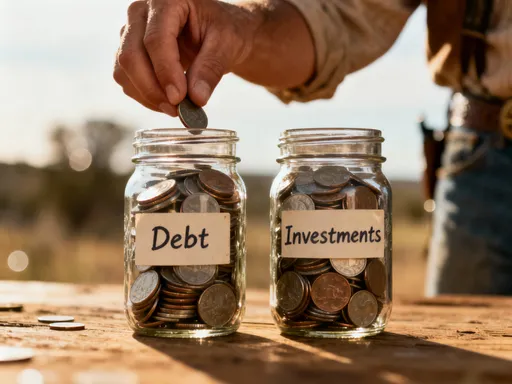
Why Financial Freedom Feels Out of Reach — I Learned the Hard Way
You’re not lazy. You’re not broke because you spend too much coffee. The real problem? You’re using the wrong financial tools — and nobody warned you. I chased “get-rich-quick” apps, trusted flashy investment platforms, and believed in “passive income” traps. I lost time, energy, and money. But here’s what actually works: seeing financial tools for what they really are — not magic wands, but levers that can either build or break your freedom. Let’s talk about the pitfalls no one wants to admit. Understanding these missteps isn’t just about avoiding loss — it’s about reclaiming control. Financial freedom isn’t reserved for the wealthy or the tech-savvy. It’s available to anyone willing to see past the noise and build something real. This is how I finally started to.
The Dream That Sets You Up for Failure
Financial freedom is one of the most marketed concepts in modern personal finance, yet it remains one of the most misunderstood. For many, the phrase conjures images of tropical vacations, early retirement by 40, or quitting a job with a single investment win. These visions are powerful, emotionally charged, and often misleading. The truth is, financial freedom does not mean never working again or living without limits. It means having enough stability and resources to make choices without constant financial fear. But because the dream is sold as effortless and immediate, people begin their journey already at a disadvantage.
Marketers know this. They use aspirational language and curated lifestyles to sell financial products that promise quick results. Social media influencers post screenshots of fake portfolios, promoting apps that claim to double your money in months. These messages prey on real frustrations — long hours, stagnant wages, rising costs — and offer false hope. The danger isn’t just in spending money on bad tools; it’s in adopting a mindset that undervalues patience, discipline, and incremental progress. When people believe freedom should come fast, they’re more likely to abandon sound strategies the moment results aren’t immediate.
This misalignment between expectation and reality leads directly to poor financial decisions. Someone might skip building an emergency fund because they’re focused on speculative investments. Another might drain savings to launch a “passive” online business after watching a viral tutorial. The emotional promise of sudden freedom overrides rational planning. But the real path to financial security isn’t dramatic. It’s consistent. It’s boring, even. It involves budgeting, saving, and making slow, deliberate choices. The tools that support this kind of journey rarely go viral — because they don’t sell dreams. They sell responsibility. And that’s exactly what makes them effective.
Tools That Pretend to Help — But Actually Harm
Not all financial tools are created equal, and some of the most popular ones today do more harm than good. Automated investing apps, for example, are often marketed as foolproof solutions for beginners. They promise to grow your money with minimal effort, using algorithms and “smart” portfolios. On the surface, this sounds ideal — especially for busy individuals juggling work, family, and personal obligations. But beneath the sleek interface lies a system that can quietly erode returns through hidden fees, lack of customization, and behavioral nudges that encourage risky behavior.
Many of these platforms charge asset-based fees, which may seem small at first — 0.25% or 0.5% per year — but compound over time and eat into long-term gains. More concerning is how they frame investing as a hands-off experience. Users are told they don’t need to understand market cycles, asset allocation, or even basic financial principles. This lack of education creates dependency. When markets dip, instead of making informed decisions, people panic and withdraw — exactly what these tools claim to prevent. The convenience becomes a liability.
Then there are gamified trading platforms, which use colors, sounds, and streaks to make buying stocks feel like playing a game. These designs are intentional. They trigger dopamine responses, encouraging frequent trading and emotional decision-making. Studies have shown that users of such platforms trade more often than traditional investors — and typically underperform as a result. The more you trade, the more you pay in fees, and the harder it becomes to stick to a long-term plan. What starts as a tool for empowerment can quickly turn into a vehicle for self-sabotage.
Robo-advisors, while useful in some cases, also fall short when used without scrutiny. They often rely on standardized risk questionnaires that fail to capture a person’s full financial picture. Someone with significant debt or irregular income might be placed in a portfolio that’s too aggressive — simply because the algorithm doesn’t ask the right questions. The danger isn’t the technology itself, but the illusion of expertise it creates. Users assume the tool knows best, when in reality, it’s only as good as the data it’s given — and the assumptions it’s built on. Trusting a tool completely, without understanding its limits, is like handing your car keys to a GPS that doesn’t know your destination.
When Passive Income Becomes a Full-Time Trap
The idea of passive income has become a cornerstone of the modern financial dream. Books, podcasts, and online courses promise that with the right system, you can earn money while you sleep. But the word “passive” is often a misnomer. Most so-called passive income streams require significant upfront work, ongoing maintenance, and continuous problem-solving. For many, what begins as a side hustle to generate extra cash ends up consuming hours of time — time that could have been spent on family, rest, or building real financial stability.
Consider the example of short-term rental platforms. A homeowner might list their spare room or vacation property, lured by stories of others earning thousands per month. But hosting isn’t as simple as setting a price and collecting checks. There are guest cancellations, cleaning schedules, maintenance emergencies, and constant communication. One bad review can lower visibility. One damaged item can eat into profits. Over time, the stress and time commitment can outweigh the financial benefit — especially when compared to the stability of a low-cost, long-term tenant.
Similarly, digital product businesses — like selling printables, courses, or stock photos — are often presented as set-it-and-forget-it ventures. But the reality is that success in these spaces requires marketing, customer support, platform updates, and constant adaptation to changing algorithms. Most creators never earn enough to replace even a part-time income. The initial investment of time and money is rarely recouped. And because these efforts are framed as “passive,” people hesitate to walk away — clinging to the hope that one day, the system will finally work.
The real cost isn’t just financial — it’s opportunity cost. Every hour spent managing an underperforming rental, tweaking an online store, or chasing algorithmic visibility is an hour not spent on higher-value activities. That time could go toward learning a marketable skill, increasing retirement contributions, or simply resting. True financial progress often comes from focused effort in areas with predictable returns — like paying down high-interest debt or increasing income through stable employment. Chasing passive income without a clear strategy can distract from these more reliable paths. The goal shouldn’t be to create endless income streams, but to build a life where financial pressure is reduced — not replaced with new obligations.
The Risk You’re Not Measuring
When most people think about financial risk, they focus on market volatility — the possibility that investments will lose value. While that’s a real concern, it’s only one piece of a much larger picture. Many overlook structural and behavioral risks that are just as damaging, if not more so. One of the most dangerous is liquidity risk — the inability to access your money when you need it. Some investment platforms lock funds for months or impose withdrawal penalties. Others tie money to illiquid assets like real estate crowdfunding, where selling quickly is nearly impossible. In a true emergency, these limitations can turn a minor setback into a crisis.
Another hidden risk is overreliance on a single platform or tool. It’s common today for people to manage all their finances through one app — banking, investing, budgeting, even borrowing. While this seems efficient, it creates a single point of failure. If that platform experiences technical issues, security breaches, or changes its fee structure, the user’s entire financial system can be disrupted. Diversification isn’t just about spreading investments across asset classes; it’s also about spreading reliance across institutions and methods. Putting all your trust in one digital ecosystem is like storing all your important documents in one folder with no backup.
Behavioral risk is equally important. Many financial tools are designed to encourage action — frequent trading, impulsive deposits, or emotional responses to market news. These behaviors feel productive, but they often lead to poor outcomes. The human brain is wired to react to short-term stimuli, and platforms that amplify this tendency make it harder to stay focused on long-term goals. A sudden drop in your portfolio value might trigger a panic sell — even if the long-term outlook hasn’t changed. The tool didn’t cause the market drop, but it may have made the emotional response worse by highlighting losses in real time.
Perhaps the most overlooked concept is tool concentration risk — the danger of depending too heavily on one type of financial method or product. Someone might believe that automated investing alone will secure their future, ignoring the importance of debt management or emergency savings. Another might focus entirely on real estate, assuming it’s a “safe” bet, without considering market cycles or maintenance costs. Real financial resilience comes from balance. It comes from having multiple layers of protection — not from betting everything on one solution, no matter how trendy or convenient it seems. Measuring risk means looking beyond returns and asking: What happens when things go wrong? How much control do I really have?
What Solid Financial Tools Actually Do
Effective financial tools don’t promise miracles. They don’t guarantee returns or eliminate effort. Instead, they provide clarity, reduce friction, and support informed decision-making. A good tool is transparent — you know exactly what fees you’re paying, how your money is being used, and what your options are. It gives you control, not just convenience. You can adjust settings, access your funds, and understand the logic behind recommendations. Most importantly, it aligns with your actual goals, whether that’s saving for a home, funding education, or building a retirement cushion.
Take a simple brokerage account with a reputable firm. It doesn’t automate your life or promise passive income. But it offers access to a wide range of investments, clear pricing, and educational resources. You decide what to buy, when to sell, and how to allocate your money. There’s no algorithm making assumptions about your risk tolerance. You’re in charge. The same goes for basic budgeting systems — whether digital apps or spreadsheets. Their power lies in visibility. When you can see where your money goes each month, you’re more likely to make intentional choices. These tools don’t do the work for you, but they make the work easier and more effective.
Debt-tracking methods are another example of practical, low-glamour tools that deliver real results. By listing all debts, interest rates, and minimum payments, a person can create a clear payoff strategy — whether using the avalanche or snowball method. The tool itself is simple, but the impact is profound. It turns an overwhelming problem into a manageable plan. Unlike flashy apps that promise instant wealth, these systems focus on reducing liabilities — which is often the fastest path to increased net worth.
The key difference is intentionality. Solid tools require some effort to learn and use, but they reward that effort with real understanding. They don’t hide complexity — they help you navigate it. Before adopting any financial tool, it’s essential to ask: Does this increase my knowledge? Does it give me more control? Or does it just make me feel busy without making progress? Tools that empower you to think, plan, and act are the ones worth keeping. The others, no matter how popular, are likely slowing you down.
Building Your System — Not Just Using Tools
Tools are only as strong as the system they’re part of. A high-quality hammer is useless without a plan to build something. The same is true in personal finance. Owning multiple apps or accounts won’t bring freedom if there’s no coherent strategy behind them. Real progress comes from creating a personalized financial system — one that integrates tracking, saving, investing, and regular review into a consistent routine. This system doesn’t need to be complex. In fact, simplicity often leads to better adherence.
A strong financial system starts with awareness. That means knowing your income, expenses, debts, and goals with clarity. From there, it builds habits — automatic transfers to savings, scheduled debt payments, monthly budget reviews. These actions become the foundation. Then, tools are added selectively to support those habits, not replace them. For example, a person might use a budgeting app to track spending, but the discipline to stay within limits comes from personal commitment, not the app itself.
Consistency matters more than sophistication. Someone who saves $200 every month through a simple bank transfer will likely outperform someone who uses five investment apps but lacks a clear plan. The first person has a system. The second has noise. To build your own system, start by auditing your current tools. Ask: Which ones actually help me make better decisions? Which ones create confusion or encourage impulsive behavior? Eliminate redundancies. Keep only what serves a clear purpose.
Next, design routines around your goals. If you’re saving for a down payment, set up a dedicated account and automate contributions. If you’re paying off credit cards, create a payoff calendar and track progress weekly. Review your system quarterly — not to chase performance, but to ensure it still aligns with your life. A system evolves as you do. The goal isn’t perfection. It’s sustainability. When your financial life runs on a reliable system, freedom stops being a distant dream and starts feeling like a daily reality.
Freedom Starts With Honesty — Not Hacks
Financial freedom isn’t found in the latest app, the hottest investment, or the most viral side hustle. It begins with honesty — about your habits, your goals, and your willingness to do the unglamorous work. No tool can replace self-awareness. No shortcut can substitute for time and consistency. The journey isn’t about avoiding effort; it’s about directing effort wisely. That means questioning every promise, testing solutions slowly, and valuing small, steady gains over dramatic but fleeting wins.
Real freedom grows quietly. It’s in the choice to save instead of splurge, to learn instead of guess, to stay the course when others chase trends. It’s built one decision at a time — not through hacks, but through habits. When you stop looking for magic and start building with intention, the path becomes clearer. You stop blaming yourself for not succeeding fast enough and start recognizing the progress you’ve made. That shift in mindset is the true foundation of lasting financial well-being. And it’s available to anyone ready to see the tools for what they are — not as saviors, but as supports in a much larger, more meaningful journey.