You Won’t Believe What I Found Shopping in Arles
Arles isn’t just about Van Gogh’s footsteps or ancient Roman ruins—trust me, the real magic happens on its sun-drenched side streets lined with hidden boutiques and bustling markets. I went looking for art, but ended up falling hard for the local shops. From handcrafted linen to vintage treasures, shopping in Arles feels authentic, slow, and deeply personal. This is not your average tourist retail run—it’s a sensory journey through Provençal life.
The Heartbeat of Provençal Shopping: Arles’ Unique Vibe
What makes shopping in Arles so different from browsing the boutiques of Paris or Nice? It’s the rhythm—the unhurried pulse of a town where commerce blends seamlessly with culture, history, and daily life. Unlike tourist-heavy destinations where shops cater to mass tastes, Arles retains a genuine local character. Its streets, layered with Roman history and Provençal charm, are dotted with small, independent retailers who take pride in what they sell. The city’s UNESCO World Heritage status isn’t just about preserving monuments; it extends to the living culture, including the way people shop, eat, and craft.
Walking through Arles feels like stepping into a rhythm that values quality over quantity. Shop windows are understated but thoughtfully arranged—no flashy signs or plastic mannequins. Instead, you’ll find bolts of patterned Provençal cotton draped like art, shelves of olive oil arranged by region, or hand-thrown ceramics glowing in the golden light. There’s a quiet dignity to the way goods are presented, reflecting the belief that beauty belongs in everyday life. This isn’t retail as performance; it’s retail as tradition.
The Mediterranean influence is also evident in the pace. Many shops close between noon and 2 p.m., honoring the local custom of pausing in the heat of the day. This isn’t inconvenient—it’s part of the experience. It reminds visitors to slow down, enjoy a café au lait at a shaded terrace, and return to shopping with fresh eyes. In Arles, shopping isn’t a checklist; it’s an extension of living well. The city’s past—Roman amphitheaters, medieval alleys, Van Gogh’s yellow house—doesn’t overshadow the present. Instead, it enriches it, giving every purchase a sense of continuity.
Marché d'Arles: A Morning Ritual You Can’t Miss
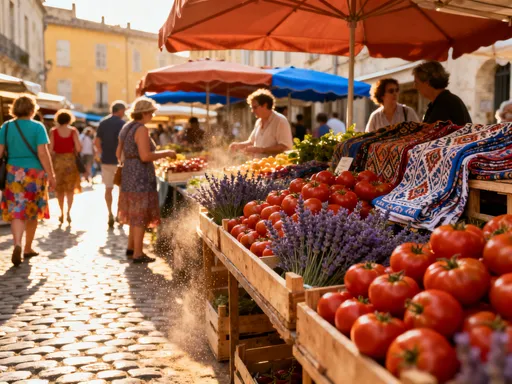
If there’s one place where the soul of Arles comes alive, it’s the Marché d'Arles. Held three times a week—Tuesday, Thursday, and Saturday mornings—the market transforms the Place du Forum into a vibrant tapestry of color, scent, and sound. Locals arrive early with woven baskets, moving from stall to stall with the ease of long practice. This is not a market designed for tourists, though visitors are welcome. It’s a living institution, a weekly ritual that sustains both community and tradition.
The sensory experience is immediate. The air carries the peppery scent of fresh thyme, the earthy aroma of ripe tomatoes still warm from the sun, and the salty tang of olives curing in barrels. Vendors call out specials in a mix of French and Provençal, their voices rising above the hum of conversation. Stalls overflow with seasonal produce: plump figs in late summer, glossy aubergines in early autumn, and tender artichokes in spring. Cheeses from the Alpilles—creamy chèvre, nutty tomme—are displayed with care, often wrapped in parchment.
But the market isn’t just about food. Scattered among the produce stalls are artisans selling hand-rolled lavender sachets, wooden kitchenware, and woven baskets made from willow. Some vendors offer ready-to-eat treats—warm socca (a chickpea pancake), slices of pissaladière (caramelized onion tart), or small cups of pastis for the older crowd. Children weave through the crowd, clutching paper cones of candied fruits. It’s a full immersion into Provençal life, where shopping is social, seasonal, and deeply rooted in place.
For visitors, the lesson is simple: come with curiosity, not just a shopping list. Ask questions. Let the vendor show you how to pick the ripest melon or which olive oil pairs best with grilled fish. A small purchase—a jar of tapenade, a sprig of rosemary—becomes more meaningful when it comes with a story. And while you can find souvenirs here, the real takeaway is the experience itself: the warmth of human connection, the pleasure of choosing something fresh and local, and the reminder that good things take time.
Boutiques with Soul: Where Tradition Meets Style
Wander beyond the market, and you’ll discover Arles’ network of small boutiques—each one a quiet celebration of regional craft. These aren’t chain stores or souvenir shops filled with mass-produced trinkets. They’re family-run businesses, often passed down through generations, where the owner greets you by name and remembers your last visit. In these shops, tradition isn’t a marketing gimmick; it’s the foundation of everything they do.
One of the most beloved local crafts is Provençal fabric—cotton printed with floral, herb, or pastoral motifs in soft, sun-bleached colors. Shops like those on Rue des Arenes or Place du Forum specialize in these textiles, offering tablecloths, napkins, and lightweight dresses. Some stores even carry vintage prints from the 1950s and 60s, preserved like heirlooms. The patterns tell stories: lavender fields, olive groves, village fountains—each a visual poem of southern France.
Equally cherished are the artisanal soaps made with olive oil and local botanicals. Found in apothecary-style shops, these soaps are often hand-cut and cured for weeks. Scents like verbena, rosemary, and orange blossom evoke the region’s wild landscapes. Unlike commercial soaps loaded with chemicals, these are gentle, long-lasting, and biodegradable—a small luxury that aligns with sustainable living.
Ceramics are another hallmark of Arles’ boutique culture. Local potters work with terracotta and white earthenware, creating everything from rustic pitchers to delicate tea sets. Many pieces are glazed in the signature blue-and-white or ochre-and-cream palettes of Provence. Window displays change with the seasons—spring brings tulip vases, summer features citrus-themed plates, and autumn showcases harvest bowls. These aren’t just decorative items; they’re designed for daily use, meant to be touched, filled, and cherished.
Hidden Courtyards and Concept Stores: The New Wave of Arles
While tradition runs deep, Arles is also embracing a new generation of creators who are reimagining Provençal style for the modern world. Tucked within 17th-century *hôtels particuliers*—once the homes of nobility—you’ll find concept stores that blend history with contemporary design. These spaces, often hidden behind unassuming doors, feel like discoveries: quiet courtyards opening into light-filled galleries of fashion, home goods, and art.
One such example is a boutique housed in a restored mansion near the Musée Départemental Arles Antique. Inside, curated collections of minimalist clothing—linen tunics, wide-leg trousers, neutral-toned dresses—are displayed alongside handmade jewelry and locally produced candles. The aesthetic is clean, understated, and deeply connected to the region’s natural palette. What sets these stores apart is their curation. Every item is chosen with intention, often made by designers who live in or are inspired by the south of France.
Another trend is the rise of multi-brand shops that support emerging artisans. These stores act as platforms for young weavers, ceramicists, and textile artists, offering a space to showcase their work without the overhead of a standalone boutique. Some focus on sustainable fashion, using organic cotton, recycled fibers, or natural dyes. Others specialize in homeware, featuring hand-thrown mugs, linen tea towels, and wooden cutting boards—all made within 100 kilometers of Arles.
These new-wave spaces don’t reject tradition; they reinterpret it. A modern dress might use a centuries-old weaving technique. A ceramic vase could echo Roman forms but with a contemporary glaze. The result is a shopping experience that feels both fresh and rooted—a dialogue between past and present. For visitors, it’s an invitation to see Provence not as a static postcard, but as a living, evolving culture.
Antiques and Vintage: Hunting for Timeless Pieces
For those who love the thrill of the hunt, Arles offers a rich vintage and antique scene. The area around Rue du Dr Fanton and the lanes leading toward the Rhône River is dotted with secondhand shops, brocantes, and small galleries specializing in 20th-century French design. This isn’t high-end Parisian antiques with sky-high price tags; it’s accessible, authentic, and full of character.
You’ll find mid-century wooden dressers with brass handles, vintage enamelware from old Provençal kitchens, and weathered armchairs reupholstered in faded floral fabric. Lighting is a particular highlight—wrought-iron chandeliers, schoolhouse-style wall sconces, and brass floor lamps that glow with warmth. Some shops specialize in farmhouse decor: terra cotta pots, iron garden tools, and old wine barrels repurposed as tables.
The best days to explore are Saturday and Sunday mornings, when new stock arrives and shopkeepers are most relaxed. Cash is still preferred in many of these smaller stores, so it’s wise to carry euros. While prices are often marked, there’s room for polite negotiation—especially if you’re buying multiple items. A simple 'Est-ce que vous faites un petit prix?' (Could you do a small discount?) is usually met with a smile and a reasonable adjustment.
When shopping for antiques, look for signs of craftsmanship: dovetail joints in drawers, hand-turned legs on tables, or original hardware. Even if a piece needs refinishing, its soul remains. And because many items have been used in local homes, they carry a quiet history—a previous life in a village house, a family kitchen, or a sunlit courtyard. Buying vintage in Arles isn’t just about decoration; it’s about preserving stories.
Craftsmanship Up Close: Workshops You Can Visit
One of the most rewarding aspects of shopping in Arles is the chance to meet the makers. Unlike cities where production is hidden behind factory walls, Arles still has artisans who work in open ateliers, often in the same spaces where they sell their goods. These workshops are quiet sanctuaries of skill and focus, where time slows and details matter.
A short walk from the city center, you’ll find a family-run weaving studio where large wooden looms click and hum as artisans create linen and cotton fabrics using traditional patterns. Visitors are welcome to watch, ask questions, and even try a few passes on the loom. The weavers explain how different tensions and threads affect the final texture, and how seasonal humidity can influence the weaving process. Buying a scarf or table runner here means supporting a craft that has been practiced in Provence for centuries.
Another gem is a small pottery workshop tucked into a 16th-century building. The potter works at a wheel, shaping clay into pitchers, bowls, and plates with calm precision. The pieces are then fired in a wood-burning kiln, giving them a unique, slightly uneven glaze that machine-made ceramics can’t replicate. Shelves display finished works—each one slightly different, bearing the mark of the maker’s hand. Some items are available for purchase on-site, and the potter often shares the inspiration behind a piece: a local landscape, a childhood memory, a seasonal festival.
Bookbinding is another craft kept alive in Arles. In a quiet studio near the old library, an artisan restores antique books and creates new journals using hand-marbled paper and leather covers. The smell of glue and parchment fills the air. Watching her work—measuring, cutting, stitching—is a meditation in patience and precision. These journals, while not cheap, are heirloom-quality objects, meant to be passed down. Buying directly from artisans like these ensures that your purchase supports not just a product, but a way of life.
How to Shop Like a Local: Timing, Tactics, and Etiquette
To truly enjoy shopping in Arles, it helps to understand the local rhythm and customs. Most small shops open around 9:30 or 10 a.m. and close for two to three hours at midday, typically from 12:30 p.m. to 3 p.m. They reopen in the late afternoon and may stay open until 7 or 8 p.m., especially in summer. Larger stores and supermarkets follow more standard hours, but the traditional siesta pattern still shapes the town’s pace.
Markets are best visited in the morning, ideally between 8 and 11 a.m., when produce is freshest and crowds are manageable. Tuesday, Thursday, and Saturday are market days at Place du Forum, while smaller neighborhood markets pop up on other days. Always bring a reusable shopping bag—plastic bags are discouraged, and many vendors won’t offer them.
When it comes to payment, while many shops now accept cards, smaller boutiques and market vendors often prefer cash. Having euros in small denominations makes transactions smoother. Tipping isn’t expected in shops, but a friendly 'merci' goes a long way. Greeting the shopkeeper with a simple 'Bonjour' when you enter is considered polite—and not doing so can be seen as rude.
Photography is generally acceptable in shops, but it’s courteous to ask first, especially if people are working or if the space is small. Avoid touching items unless invited, and take your time—there’s no pressure to buy. In fact, taking time to browse, ask questions, and engage in conversation is often appreciated. A few words of French, even if imperfect, show respect and open doors. Phrases like 'Je cherche un cadeau pour ma mère' (I’m looking for a gift for my mother) or 'C’est fait ici?' (Is this made here?) can spark meaningful exchanges.
Conclusion
Shopping in Arles is more than transactions—it’s connection. Each purchase tells a story of place, people, and pride. When you buy here, you’re not just bringing home an object; you’re carrying a piece of Provençal soul. Whether it’s a bolt of printed cotton, a hand-thrown bowl, or a jar of lavender honey, the items you find are rooted in tradition, crafted with care, and tied to the land and its seasons. This is shopping with meaning, where every vendor, every market stall, every quiet workshop becomes a memory in the making. Let your next trip be one where every find feels intentional, every interaction enriching, and every moment a step deeper into the heart of southern France.